Ir al contenido
Encontrar una logística fiable entre Vietnam e Indonesia puede resultar abrumador. Con docenas de transitarios que presumen de su experiencia, ¿cómo saber cuál puede realmente entregar sus mercancías con seguridad, a tiempo y sin costes inesperados? Si elige mal, su envío podría retrasarse semanas.
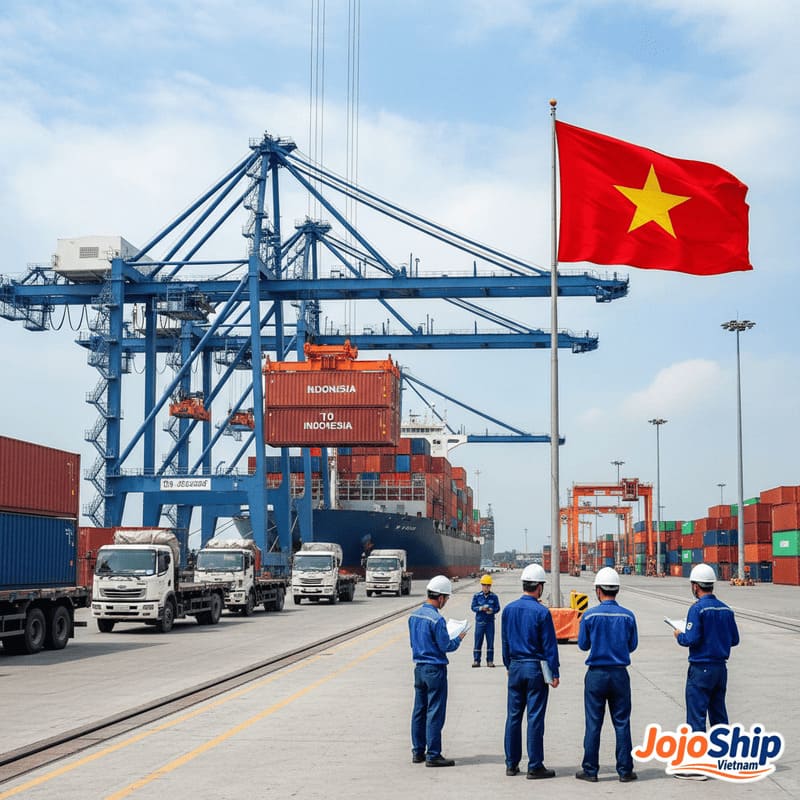
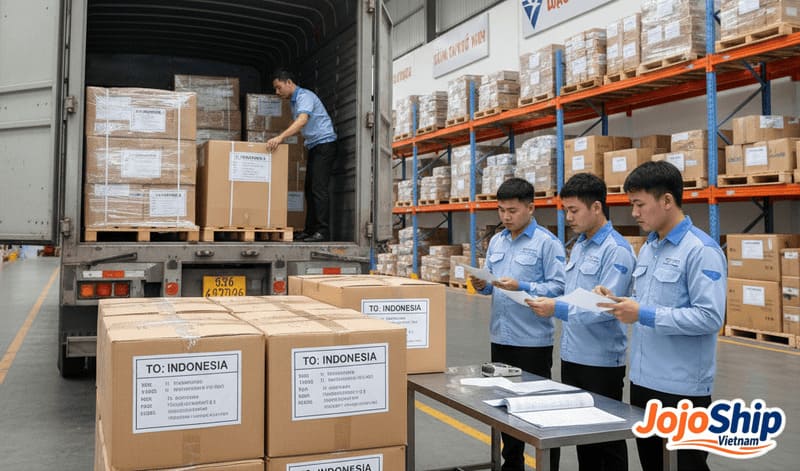
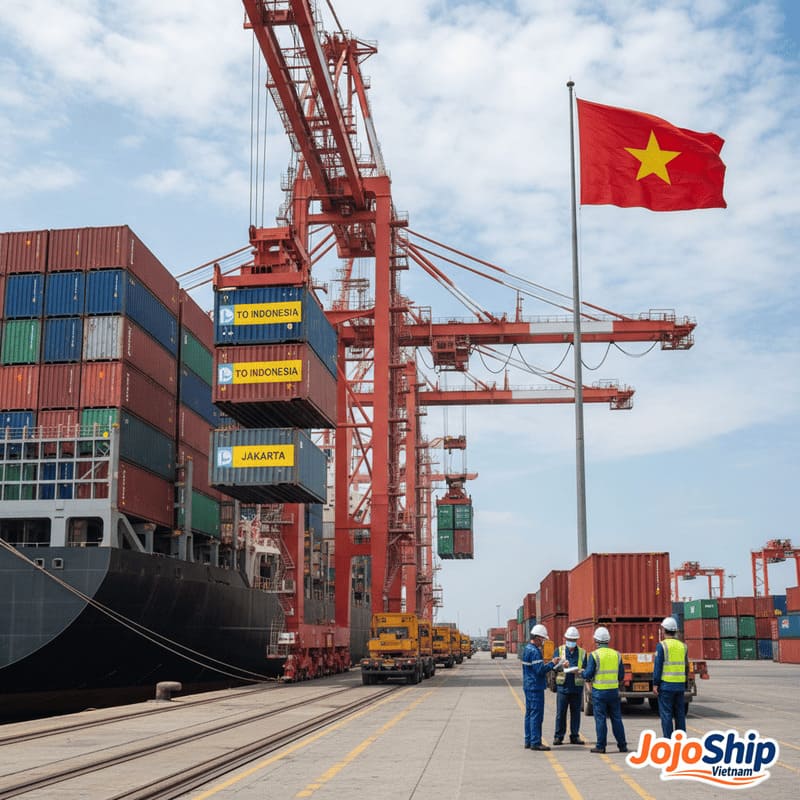
Entre los transitarios que prestan servicio en la ruta de Vietnam a Indonesia se encuentran proveedores establecidos como JojoShip Vietnam, DB Schenker Vietnam, Maersk Vietnam, Expeditors, DHL Global Forwarding, Kuehne+Nagel Vietnam, Dimerco Express, CMA CGM Logistics y varios especialistas locales que ofrecen soluciones de transporte marítimo, aéreo y multimodal.
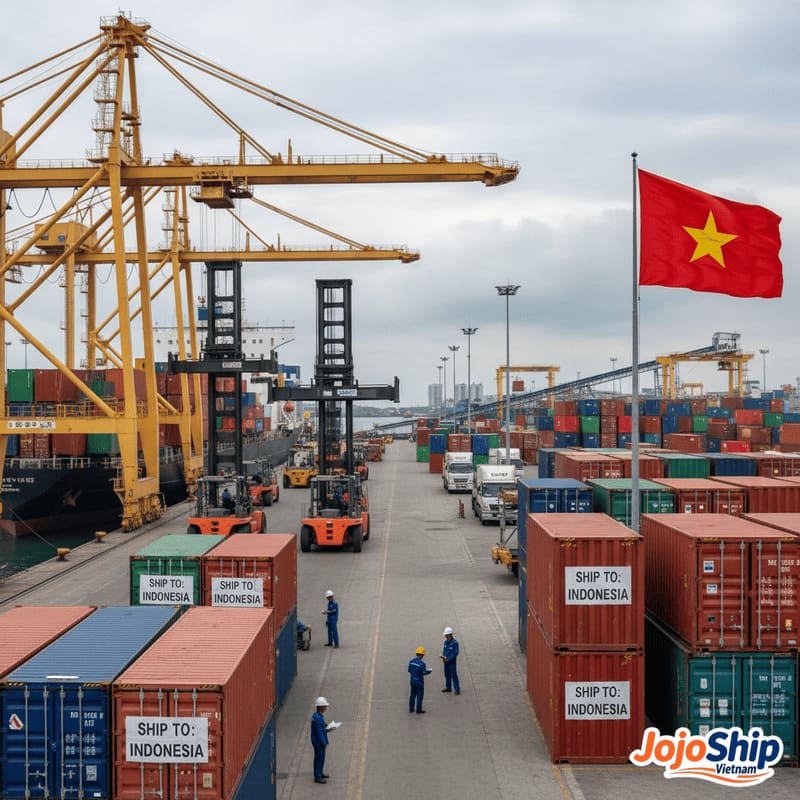
Cuando empecé a ayudar a las empresas a realizar envíos de Vietnam a Indonesia, me sorprendió la complejidad de esta ruta aparentemente sencilla del Sudeste Asiático. Muchos expedidores sufrían retrasos, tasas inesperadas y una comunicación deficiente. Permítanme compartir lo que he aprendido sobre la selección del transitario adecuado para esta ruta comercial específica.
¿Tengo que pagar aduanas por un paquete de Vietnam a Indonesia?
¿Tiene dudas sobre las tasas aduaneras a las que se enfrentará su envío? ¿Le preocupa que cargos inesperados mermen sus márgenes? Los derechos de aduana suelen ser el aspecto más confuso del transporte internacional, especialmente entre mercados en desarrollo.
Sí, debe pagar derechos de aduana e impuestos cuando realice envíos de Vietnam a Indonesia, a menos que sus mercancías puedan acogerse a las exenciones de la Zona de Libre Comercio de la ASEAN. Los derechos de importación suelen oscilar entre 0 y 40% del valor declarado, más 10% de IVA y posibles impuestos adicionales en función de la categoría del producto.
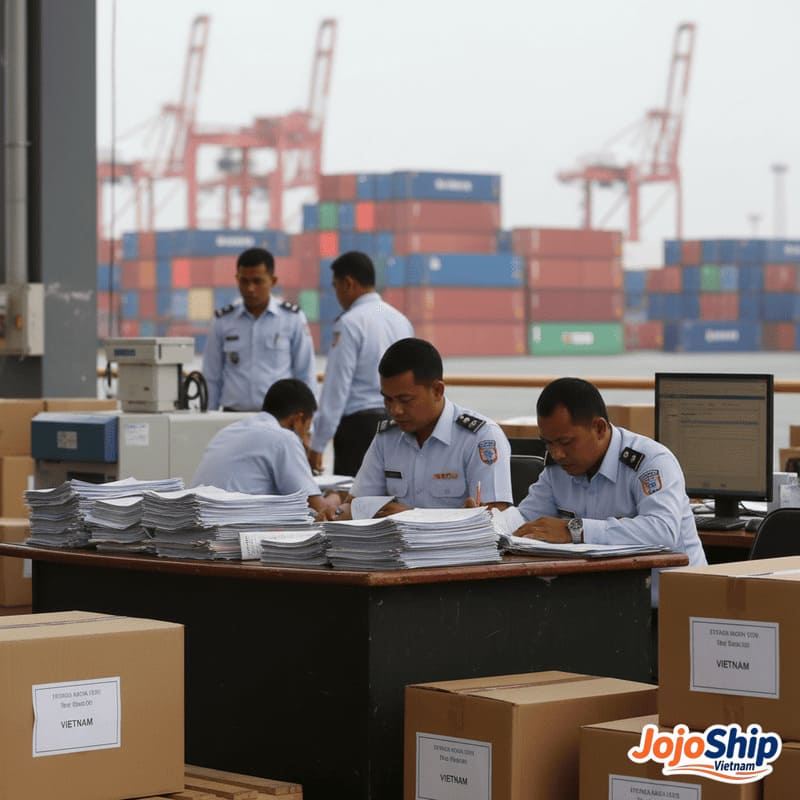
Recuerdo que ayudé a un exportador primerizo a enviar muestras de ropa de Ciudad Ho Chi Minh a Yakarta. Se llevaron una gran sorpresa cuando su paquete fue retenido en la aduana por el pago inesperado de aranceles. Permítanme explicarles lo que deben saber sobre los requisitos aduaneros para esta ruta.
Comprender los procedimientos aduaneros para los envíos de Vietnam a Indonesia
El proceso aduanero entre Vietnam e Indonesia implica varias consideraciones importantes que afectan directamente a los costes y plazos de envío:
| Aspecto | Detalles | Lo que hay que saber |
|---|---|---|
| Beneficios comerciales de la ASEAN | Vietnam e Indonesia son miembros de la ASEAN | Muchas mercancías pueden acogerse a aranceles reducidos o nulos en virtud del acuerdo ATIGA con la documentación adecuada |
| Certificado Formulario D1 | Necesario para el trato preferencial de la ASEAN | Debe obtenerse de la Cámara de Comercio de Vietnam antes del envío |
| Umbral mínimo2 | Indonesia: Actualmente 3 USD por envío | Un umbral extremadamente bajo significa que prácticamente todos los envíos comerciales están sujetos a aranceles |
| Derechos de importación3 | Gama de 0-40% en función del código SA | Se requiere una clasificación correcta para determinar la tasa aplicable |
| Impuesto sobre el Valor Añadido4 | 10% sobre el valor CIF más el importe del derecho | Se aplica a prácticamente todas las importaciones |
| Impuesto de lujo5 | 10-125% sobre determinadas mercancías | Se aplica a vehículos, alcohol, electrónica y artículos de lujo |
| Artículos restringidos | Industria textil, electrónica, alimentaria y farmacéutica | Requieren permisos especiales y pueden ser objeto de inspecciones adicionales |
| Artículos prohibidos | Estupefacientes, armas, determinados medios de comunicación | No puede importarse en ningún caso |
| Licencias de importación6 | NPIK para determinados productos | Necesario para textiles, electrónica, juguetes, alimentos y bebidas |
| Inspección previa al envío7 | Puede exigirse para determinadas mercancías | Especialmente aplicable a productos alimenticios, químicos y electrónicos |
Cuando ayudé a un cliente a enviar piezas de automóvil de Hanoi a Surabaya, sufrimos retrasos considerables porque no habían obtenido de antemano las licencias de importación adecuadas. Las autoridades aduaneras indonesias retuvieron el envío durante tres semanas mientras se obtenía la documentación adecuada, lo que supuso unos gastos de almacenamiento superiores al coste original del envío.
El Acuerdo sobre el Comercio de Mercancías de la ASEAN (ATIGA, por sus siglas en inglés) ofrece importantes beneficios a los expedidores de esta vía, pero muchos exportadores no aprovechan adecuadamente estas ventajas. Para beneficiarse de los tipos de derechos preferenciales (a menudo 0%), sus productos deben cumplir los requisitos de las normas de origen, lo que suele significar que al menos 40% del valor se añade dentro de la ASEAN. También debe obtener un certificado Formulario D de las autoridades vietnamitas antes del envío.
Para el comercio electrónico y los envíos de paquetes pequeños, el umbral de minimis extremadamente bajo de Indonesia, de 3 USD, significa que prácticamente todos los envíos comerciales tendrán que pagar derechos de aduana. Se trata de una cifra muy inferior a la de muchos otros países y pilla por sorpresa a quienes realizan envíos por primera vez.
Indonesia también aplica un complejo sistema de restricciones a la importación y requisitos de autorización. Por ejemplo, las importaciones textiles requieren una licencia NPIK (Nomor Pengenal Importir Khusus), mientras que los productos alimentarios necesitan registrarse en BPOM (el equivalente indonesio de la FDA). Sin estas aprobaciones antes del envío, sus mercancías pueden ser rechazadas o sufrir largos retrasos.
Un transitario profesional con experiencia en Indonesia le ayudará a cumplir estos requisitos, a menudo preparando un plan de despacho de aduanas antes de que sus mercancías salgan de Vietnam. Le asesorarán sobre la documentación adecuada, la clasificación precisa en el código HS y los permisos necesarios para sus productos específicos.
¿Cuál es la forma más barata de enviar de Vietnam a Indonesia?
¿Tiene problemas con la gastos de envío8 ¿disminuyen sus márgenes? ¿No está seguro de qué modo de transporte ofrece el mejor equilibrio entre costes y costes? tiempo de tránsito9? Encontrar opciones de transporte económicas sin sacrificar la fiabilidad es un reto habitual en esta ruta.
La forma más barata de enviar de Vietnam a Indonesia es el transporte marítimo consolidado (LCL), que cuesta $25-45 por metro cúbico más gastos básicos. Para los envíos más pequeños, los servicios postales como EMS ($15-30 para paquetes de menos de 10 kg) ofrecen opciones económicas, mientras que los volúmenes más grandes se benefician del flete marítimo FCL con tarifas en torno a $600-1.200 por un contenedor de 20 pies.
Cuando empecé a ayudar a las empresas a optimizar su relación Vietnam-Indonesia gastos de envío8Descubrí que muchos pagaban de más por elegir métodos de envío equivocados. Permítanme compartir lo que he aprendido sobre las opciones rentables para esta ruta específica.
Comparación de las opciones de envío de Vietnam a Indonesia
Conocer todas las implicaciones económicas de los distintos métodos de envío le ayudará a tomar la decisión más económica para sus necesidades específicas:
| Método de envío | Tiempo de tránsito | Coste | Volumen mínimo | Lo mejor para | Consideraciones clave |
|---|---|---|---|---|---|
| Transporte marítimo LCL | 7-14 días | $25-45/CBM + gastos básicos | 0,5-1 CBM | Envíos medianos | Más económico para volúmenes medios |
| Flete marítimo FCL | 5-10 días | Contenedor $600-1.200/20 pies | ~10-15 CBM | Grandes envíos | Más rentable para llenar 50%+ de contenedor |
| Carga aérea | 2-5 días | $5-8/kg | 45+ kg | Artículos urgentes/valiosos | Exponencialmente más caro que el transporte marítimo |
| Correos/EMS | 7-21 días | $15-30 para <10kg | N/A | Paquetes pequeños, muestras | Seguimiento limitado, posibles retrasos aduaneros |
| Mensajería urgente (DHL/FedEx) | 2-4 días | $50+ para envases de 1 kg | N/A | Documentos, muestras | El más caro, pero el más fiable para artículos pequeños |
| Multimodal (camión+mar) | 10-20 días | Variable | Variable | Lugares remotos | Bueno para destinos del interior más allá de los grandes puertos |
Una vez ayudé a un exportador de muebles que hacía envíos de Dong Nai a Yakarta y utilizaba el transporte aéreo para todas sus muestras, gastando más de $500 por envío. Al cambiar a flete marítimo consolidado (LCL)10redujimos su gastos de envío8 en más de 70% mientras que sólo añade 8 días a tiempo de tránsito9 - una compensación que merece la pena para las muestras no urgentes.
La ruta marítima Vietnam-Indonesia está bien establecida, con servicios regulares desde puertos importantes como Ho Chi Minh y Hai Phong a Yakarta, Surabaya y otros destinos indonesios. Para los envíos de más de 2-3 metros cúbicos, pero más pequeños que un contenedor completo, el transporte marítimo LCL (Less than Container Load) ofrece la mejor relación calidad-precio. Con tarifas que suelen oscilar entre $25-45 por metro cúbico más gastos básicos de $100-200, esta opción equilibra eficazmente el coste y el tiempo de tránsito.
Para envíos más grandes que puedan llenar al menos medio contenedor, el transporte marítimo FCL (Full Container Load) resulta más económico. Un contenedor de 20 pies de Vietnam a Indonesia suele costar entre $600 y 1.200, dependiendo de los puertos específicos y de las condiciones actuales del mercado. Si su mercancía ocupa más de 10-15 metros cúbicos, es probable que esta opción ofrezca mejores costes de envío por unidad que los envíos consolidados.
El transporte aéreo, aunque es mucho más rápido, tiene un precio superior: suele ser entre 5 y 8 veces más caro que el transporte marítimo. De Vietnam a Indonesia, las tarifas rondan $5-8 por kilogramo para envíos de más de 45 kg. Esta opción sólo tiene sentido desde el punto de vista económico para artículos de gran valor y poco peso o envíos realmente urgentes en los que el ahorro de tiempo justifica el coste adicional.
Para envíos muy pequeños de menos de 10 kg, servicios postales como EMS11 (Express Mail Service) de Vietnam Post ofrecen opciones sorprendentemente económicas a $15-30 por paquete, aunque con un seguimiento limitado y plazos de entrega variables. Aunque no es adecuado para carga comercial valiosa, puede ser una solución eficaz para muestras o artículos de poco valor.
Costes ocultos a tener en cuenta al elegir un método de envío
El precio del transporte es sólo uno de los componentes del coste total del envío. Para evitar sorpresas, tenga en cuenta estos gastos adicionales:
| Categoría de costes | Alcance típico | Cómo minimizar |
|---|---|---|
| Origen Manipulación | $50-150 | Consolidar envíos |
| Despacho aduanero de exportación | $30-100 | Trabajar con transportistas experimentados |
| Tasas de documentación | $20-75 por juego | Garantizar una preparación precisa a la primera |
| Derechos e impuestos de importación | 0-40% de valor + 10% de IVA | Verificar la elegibilidad para la ASEAN |
| Manipulación en destino | $75-200 | Elija transitarios con oficinas propias en ambos extremos |
| Entrega en la última milla | $30-200+ según la ubicación | Considere la recogida en puerto para los envíos de mayor volumen |
| Almacenamiento/desembarque | $15-50/día | Asegurarse de que la documentación está lista antes de la llegada |
| Seguros | 0,3-0,7% de valor de la carga | Necesario para envíos valiosos |
| Fumigación/Inspección | $50-200 en caso necesario | Verifique los requisitos antes del envío |
| Comisiones bancarias | Varía según el método de pago | Considerar alternativas a T/T para pedidos pequeños |
A un cliente que transportaba textiles de Vietnam a Indonesia le cotizaron una tarifa "puerto a puerto" muy competitiva, pero acabó pagando casi el doble después de tener en cuenta estos costes adicionales. Un transitario más transparente podría haber cotizado inicialmente un poco más alto, pero incluir la mayoría de estos servicios para obtener un mayor valor global.
Estrategias de ahorro para el transporte de Vietnam a Indonesia
Basándome en mi experiencia en la gestión de cientos de envíos por esta ruta, he aquí estrategias probadas para reducir su gastos de envío8:
-
Consolidar envíos: En lugar de hacer varios envíos pequeños, consolídelos en pocos envíos más grandes. Ayudé a un exportador de productos electrónicos a reducir sus costes en 40% pasando de pequeños envíos semanales a envíos consolidados quincenales.
-
Optimizar el envasado: Las aduanas indonesias cobran en función del peso y el volumen. Utilizar embalajes que ocupen poco espacio puede reducir considerablemente los costes, especialmente en los envíos LCL, en los que se paga por peso volumétrico.
-
Planificar las temporadas altas: Las tarifas de envío suelen aumentar durante las fiestas vietnamitas e indonesias (especialmente el Año Nuevo Lunar y el Ramadán). Planificar los envíos fuera de estos periodos puede garantizar mejores tarifas.
-
Aprovechar las ventajas de la ASEAN: Asegúrese de que sus productos pueden acogerse a los derechos preferenciales de la ASEAN obteniendo la documentación adecuada. Esto puede ahorrar hasta 40% en derechos de importación.
-
Comparar varios transitarios: Las tarifas pueden variar considerablemente de un proveedor a otro. Siempre recomiendo obtener al menos 3-4 presupuestos para cada envío, ya que he visto diferencias de precio de 30%+ para servicios idénticos.
-
Negociar compromisos de volumen: Si tiene envíos regulares, comprométase a un volumen mínimo con un transitario para asegurarse tarifas preferentes. Este enfoque ayudó a uno de mis clientes a reducir sus costes de flete en 15-20% en comparación con las tarifas spot.
-
Considerar diferentes puertos: A veces, el envío desde Da Nang en lugar de Ho Chi Minh, o a Surabaya en lugar de Yakarta, puede ofrecer ventajas de costes en función de sus lugares de origen y destino.
-
Utilizar un mercado de cargas: Las plataformas digitales como Freightos o iContainers le permiten comparar varios presupuestos rápidamente, aunque las relaciones establecidas con los transitarios suelen ofrecer un mejor valor a largo plazo.
Cómo seleccionar el transitario adecuado de Vietnam a Indonesia
Basándome en mi experiencia en la gestión de esta línea comercial, he aquí lo que hay que buscar en un transitario12:
Cualificaciones clave para los transitarios Vietnam-Indonesia
| Cualificación | Por qué es importante | Cómo verificar |
|---|---|---|
| Presencia física | Las oficinas locales garantizan un mejor control y comunicación | Confirmar la ubicación real de las oficinas en ambos países |
| Experiencia de la ASEAN | Conocimiento de los acuerdos comerciales preferenciales y su documentación | Pida ejemplos concretos de envíos gestionados por la ASEAN |
| Experiencia en aduanas indonesias | Navegar por complejas normativas y licencias de importación | Pregunte sobre la experiencia específica con su categoría de producto |
| Relaciones con los transportistas | Mejores tarifas y prioridad durante las crisis de capacidad | Pregunte qué transportistas utilizan y compromisos de volumen13 |
| Opciones de seguro | Protección contra pérdidas o daños | Verificar los límites de cobertura y los procedimientos de reclamación |
| Personal multilingüe | Comunicarse eficazmente en vietnamita, indonesio e inglés. | Probar la comunicación en las interacciones iniciales |
| Historial | Fiabilidad demostrada en esta ruta específica | Solicite referencias de clientes similares |
| Plataforma tecnológica | Visibilidad de los envíos y gestión de la documentación | Solicite una demostración de su sistema de seguimiento |
| Resolución de problemas | Capacidad para hacer frente a los inevitables problemas de transporte | Pregunte cómo han resuelto problemas concretos |
| Gama de servicios | Puede gestionar requisitos especiales según sea necesario | Confirme que ofrecen servicios que se ajustan a sus necesidades |
Cuando selecciono transitarios para los clientes de esta ruta, presto especial atención a su idioma indonesio. despacho de aduanas14 capacidades. Indonesia tiene una normativa de importación compleja que cambia con frecuencia, y muchos transitarios sin conocimientos especializados se enfrentan a costosos retrasos.
Principales transitarios de Vietnam a Indonesia
Según mi experiencia e investigación de mercado, estas empresas han establecido un servicio fiable en la ruta Vietnam-Indonesia:
-
JojoShip Vietnam - Nuestra empresa está especializada en las rutas comerciales del Sudeste Asiático y cuenta con oficinas en Vietnam e Indonesia. Ofrecemos una experiencia aduanera especialmente sólida y opciones de envío consolidadas.
-
DB Schenker Vietnam - Proveedor logístico mundial con una amplia red de cobertura en ambos países y sólidas capacidades multimodales.
-
DHL Global Forwarding - Excelente para el transporte aéreo de mercancías y las opciones exprés de gran fiabilidad pero precio elevado.
-
CMA CGM Logística - Aprovecha la sólida red de transportistas marítimos de la empresa matriz para obtener tarifas de transporte marítimo competitivas.
-
Expedidores - Sólida plataforma tecnológica y despacho de aduanas14 experiencia, especialmente valiosa para los envíos complejos.
-
Maersk Vietnam - Servicios de transporte directo con soluciones logísticas integradas para necesidades puerta a puerta.
-
Dimerco Express - Especialista asiático con opciones de transporte aéreo de mercancías especialmente sólidas entre los países.
-
Kuehne+Nagel Vietnam - Red mundial con una sólida logística de contratos y servicios de valor añadido.
-
APL Logística - Experiencia especializada en los sectores minorista, de bienes de consumo y del automóvil.
-
Especialistas locales como Kargoo Indonesia, AlphaTrans Vietnam y Cargo Rush International- suelen ofrecer tarifas más competitivas y un servicio personalizado a los pequeños transportistas.
El "mejor" transitario depende, en última instancia, de sus necesidades específicas. Para envíos FCL de gran volumen, los transitarios afiliados al transportista, como Maersk, suelen ofrecer tarifas competitivas. Para cargas mixtas que requieren consolidación, especialistas como JojoShip Vietnam ofrecen una valiosa experiencia. Para los envíos urgentes, las empresas con redes sólidas de transporte aéreo, como DHL o Dimerco, suelen ser las más adecuadas.
Mi experiencia en la gestión de envíos de Vietnam a Indonesia
A lo largo de los años, he aprendido que el éxito de los envíos por esta ruta depende de la preparación y la colaboración. Un caso especialmente complicado fue ayudar a un fabricante vietnamita de muebles a exportar piezas artesanales a un proyecto hotelero indonesio.
El envío se enfrentaba a múltiples obstáculos: productos de madera que requerían certificados de fumigación, documentación comercial incompleta del fabricante y plazos de entrega ajustados en Indonesia. En estrecha colaboración con el exportador y el importador, elaboramos una lista de comprobación exhaustiva que cumplía todos los requisitos antes de que los productos salieran de la fábrica vietnamita.
Cuando Indonesia implantó repentinamente una nueva normativa que exigía una certificación adicional del tratamiento de la madera a mitad del proyecto, nuestro equipo local en Yakarta pudo comprometerse con funcionarios de aduanas15 directamente, evitando posibles semanas de retraso.
Esta experiencia reforzó mi convicción de que, en el transporte marítimo Vietnam-Indonesia, la experiencia local tanto en origen como en destino tiene un valor incalculable. La tarifa más competitiva no sirve de nada si la mercancía es retenida en la aduana o se enfrenta a problemas de conformidad inesperados.
Crear una estrategia de transporte marítimo Vietnam-Indonesia de éxito
Para las empresas que realizan regularmente envíos entre estos países, recomiendo desarrollar un enfoque global:
-
Entender los requisitos de su producto: Identifique las licencias, certificados o restricciones aplicables a sus mercancías específicas en Indonesia.
-
Establecer relaciones con varios transitarios: Los distintos transportistas destacan en aspectos diferentes: mantenga relaciones con 2-3 especialistas.
-
Crear una plantilla de documentación detallada: Desarrollar documentos normalizados que cumplan los requisitos de exportación vietnamitas y de importación indonesios.
-
Aprovechar las ventajas de la ASEAN: Garantizar que todos los envíos cumplen los requisitos para recibir un trato preferente en virtud de la ATIGA manteniendo la documentación adecuada.
-
Considerar la estrategia de inventario: Para los envíos regulares, evalúe la posibilidad de mantener existencias en almacenes aduaneros indonesios para reducir los plazos de entrega y agilizar el despacho de aduanas.
-
Desarrollar planes de contingencia: Identificar rutas, transportistas y puntos de entrada alternativos en caso de interrupciones en los puertos primarios.
-
Seguimiento periódico del mercado: Las tarifas de transporte del Sudeste Asiático pueden fluctuar significativamente. Manténgase informado sobre los cambios de capacidad y las tendencias de las tarifas.
-
Invertir en relaciones: Establecer buenas relaciones tanto con su transitario como con los funcionarios de aduanas puede ser muy beneficioso cuando surjan problemas.
Un cliente que aplicó este enfoque estratégico redujo su tiempo medio de despacho de aduanas de 7 a sólo 2 días, al tiempo que recortó sus costes logísticos totales en casi 20%. La clave fue pasar de un enfoque transaccional (buscar la tarifa más barata para cada envío) a una asociación estratégica con transitarios especializados en esta vía comercial específica.
Gestión de los retos estacionales en las rutas Vietnam-Indonesia
El transporte marítimo entre Vietnam e Indonesia es único retos estacionales16 que vale la pena planificar:
| Temporada/Periodo | Desafío | Respuesta estratégica |
|---|---|---|
| Año Nuevo Lunar (enero/febrero) | Fábricas y proveedores logísticos vietnamitas cerrados o con servicio limitado | Reservar espacio con 3-4 semanas de antelación; crear una reserva de existencias |
| Ramadán/Eid (varía) | Capacidad reducida y retrasos aduaneros en Indonesia | Espere más tiempo tiempo de tránsito9s; preparar la documentación con antelación |
| Junio-agosto | Recargos por temporada alta en el transporte marítimo | Reserve con más antelación; considere las tarifas contractuales |
| Octubre-diciembre | Congestión por las fiestas | Reservar espacio con 3-4 semanas de antelación; introducir flexibilidad en los plazos de entrega |
| Temporada de monzones (varía según la región) | Retrasos portuarios, transporte por carretera |
Conclusión
Seleccionar al transitario adecuado para el envío de Vietnam a Indonesia requiere evaluar la experiencia en las normativas comerciales de la ASEAN, verificar la presencia física en ambos países, comparar presupuestos completos que incluyan todas las tasas y comprobar la fiabilidad con los envíos iniciales antes de desarrollar una asociación estratégica que optimice su cadena de suministro.
-
Infórmese sobre el Certificado Formulario D para asegurarse de que cumple los requisitos para recibir un trato preferente en las aduanas. ↩
-
Descubra cómo afecta el umbral de minimis a sus envíos y a sus posibles aranceles. ↩
-
Conocer los tipos de los derechos de importación puede ayudarle a presupuestar con precisión sus envíos. ↩
-
Comprender el IVA de las importaciones es crucial para calcular los gastos totales de envío. ↩
-
Descubra cómo el impuesto de lujo puede afectar a sus gastos de envío de artículos de gran valor. ↩
-
Infórmese sobre las licencias de importación necesarias para evitar retrasos y tasas adicionales. ↩
-
Comprender los requisitos de la inspección previa a la expedición puede evitar costosos retrasos en los envíos. ↩
-
Descubra estrategias para minimizar los gastos de envío y mejorar su cuenta de resultados. ↩ ↩ ↩ ↩
-
Conocer el tiempo de tránsito puede ayudarle a planificar sus envíos con mayor eficacia. ↩ ↩ ↩
-
Comprender el concepto LCL puede ayudarle a ahorrar significativamente en los costes de transporte de envíos de tamaño medio. ↩
-
Descubra cómo EMS puede ofrecer opciones económicas para paquetes pequeños de menos de 10 kg. ↩
-
Elegir el transitario adecuado puede repercutir significativamente en la eficacia y los costes de sus envíos. ↩
-
Explore cómo la negociación de compromisos de volumen puede suponer ahorros significativos. ↩
-
Obtenga información sobre el despacho de aduanas para evitar retrasos y costes adicionales. ↩ ↩
-
Una buena relación con los funcionarios de aduanas puede agilizar el proceso de envío. ↩
-
Comprender los retos estacionales puede ayudarle a planificar sus envíos con mayor eficacia. ↩